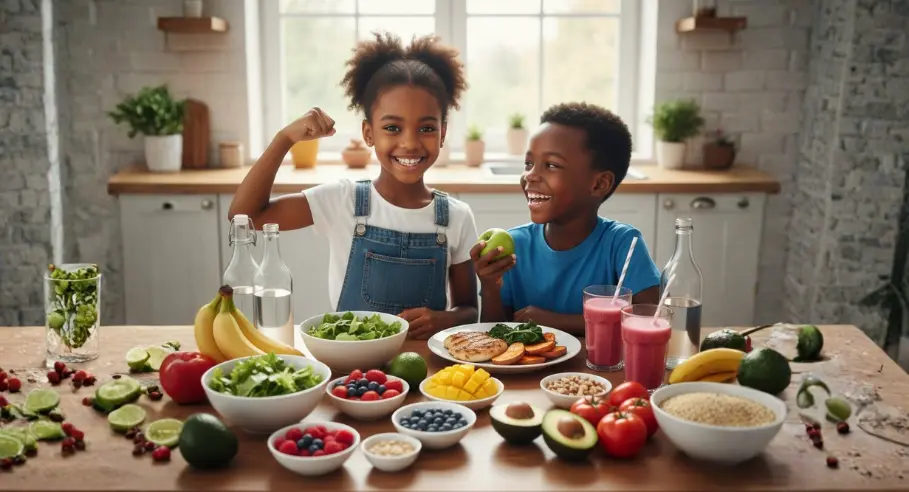


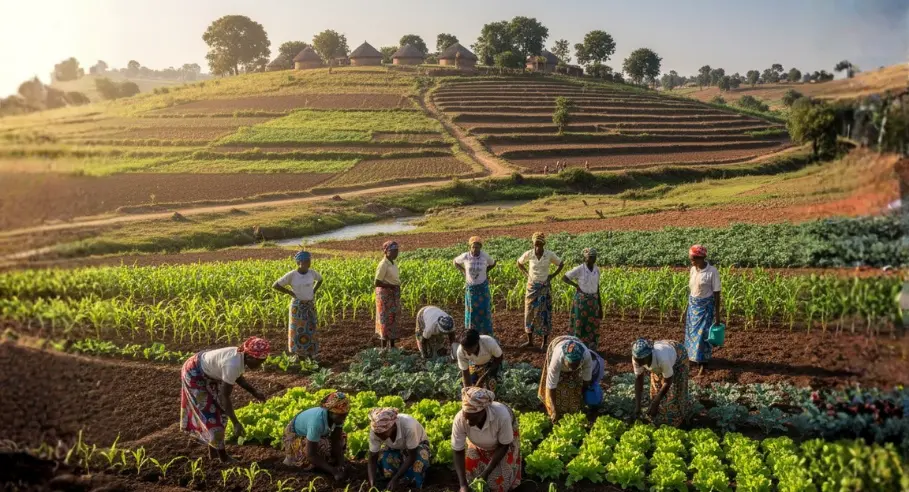
The establishment of food and fruit production at the Promise Village Academy is a direct investment in the long-term health and self-sufficiency of our students. This project, driven by our Nutrition Program, aims to reduce reliance on external supply chains, cut costs, and guarantee the availability of safe, pure, and nutritious food year-round. This is our commitment to Sustainable Food Production Africa.
Project Objectives and Principles
Our farming and gardening project is guided by clear objectives focused on maximizing health and minimizing environmental risk:
Financial Efficiency: To significantly reduce the operational costs associated with purchasing food in bulk, channeling those savings back into specialized educational programs.
Guaranteed Availability: To ensure a stable, constant supply of essential food for all 271 students and staff, regardless of market volatility.
Pure Nutrition: To produce food that is free of the chemical additives often used in commercially stored food, making our meals healthy and suitable for consumption.
Environmental Stewardship: To preserve our school environment through responsible gardening practices and tree planting.
The Production Year: Report (February – August 2025)
The production cycle from February to August 2025 involved large-scale cultivation of core food crops (maize, soya beans, sunflowers, cassava, and sweet potatoes) using tilling and specialized fertilizer application.
Measurable Harvest Data (August 2025)
Despite facing significant climatic challenges (detailed below), the initial harvest secured a vital source of nutrition for the academy:
| Crop | Harvest Amount | Total Weight |
|---|---|---|
| Maize | 50 sacks (130 kg/sack) | 5.4 Tons |
| Soya Beans | 11 sacks (150 kg/sack) | 1.8 Tons |
| Sunflower | 11 sacks (75 kg/sack) | 0.5 Tons |
The Green House and Garden: Daily Health Supply
Complementing the large crop fields, the intensive gardening project—active since January 2025—provides crucial daily vitamins and fresh produce.
Vegetables: Spinach, colored greens, cabbage, okra, carrots, tomatoes, and onions ensure our meals meet the high standards set by our Houston dietician.
Fruits: A variety of fruits, including oranges, watermelons, lemons, guavas, papayas, and bananas, contribute essential vitamins to the students’ diets.
Environmental Impact: We actively planted trees across the school compound, from the front of classrooms to the roads, reinforcing environmental preservation and making the campus a more attractive place to learn.
Challenges and The Critical Need for Irrigation
Climatic Instability and Lost Potential
The period was heavily affected by unpredictable rain and weather patterns (sunny, cloudy, winter), which stunted the growth of certain crops, particularly maize and sunflowers. This climatic confusion meant the final harvest was below the planned yield, directly threatening our goal of year-round food stability.
The Solution: Irrigation for Guaranteed Yield
To overcome this dependency on erratic rainfall, the core finding of this project report is the critical need for a sustainable water source.
Recommendation: We are committed to introducing irrigation agriculture for 15 acres of farmland. This will:
Eliminate Climate Risk: Allow us to produce food consistently without relying on unpredictable rain, securing our supply.
Maximize Investment: Guarantee the yield from our seed and fertilizer investments every time we plant, making the farm financially efficient.
Ensure Food Availability: Achieve the objective of having enough food available at all times, securing the nutritional foundation of our Africa Generational Poverty Education commitment.
Overcoming Operational and Security Challenges
Beyond the weather, we implemented solutions for other operational issues:
Wild Animals: To combat animals like zebra and elephant, we implemented a watchman and reinforced the perimeter with thorn trees. This makes the Barbwire Farm Fence project (listed in our campaigns) an urgent and necessary infrastructure investment.
Manpower and Machinery: We successfully utilized mechanized help (tractors) for tilling, which streamlined the initial planting phase and proved the value of modern equipment in Sustainable Food Production Africa.
Your Call to Action: Secure the Harvest
This report proves that our farming project works, but its full potential is currently held back by unreliable water access. The next step is to secure a harvest that is predictable, abundant, and immune to the changing climate.
By helping us fund the irrigation system, you are directly investing in the long-term food security and health of every child.
Fund the Future of Food:
Support the Solar Equipment campaign or the Water Pump campaign today!