

At Africa’s Promise Village (APV), our commitment to Sustainable Food Production Africa is rooted in the soil of our own farmland. The “Farming & Gardening Project Report” is not just a record of crops; it’s a testament to our dedication to feeding our 271 students and staff purely, reliably, and independently.
This report details the immense potential and the critical challenges we faced during the 2025 production cycle, highlighting why an investment in irrigation infrastructure is the vital next step to guarantee food security and secure our Nutrition Program.
Project Mandate: Guaranteeing Pure, Affordable Nutrition
The farming and gardening project was launched with a clear, dual mandate: to ensure food stability and maximize the impact of every donation dollar.
Strategic Objectives
Our core objectives for Sustainable Food Production Africa are:
Financial Efficiency: To drastically reduce the bulk cost of purchasing food externally, allowing funds saved to be redirected into essential specialized care and higher education tuition.
Guaranteed Supply: To ensure the consistent, round-the-clock availability of food for the 7-day-a-week feeding program, removing reliance on volatile local markets.
Health Integrity: To produce pure foods without chemical additives often found in commercially stored bulk crops, aligning with our high standards for student health.
Environmental Preservation: To actively participate in environmental preservation by planting trees and cultivating the land responsibly.
The First Phase: Tilling and Cultivation (Feb – Aug 2025)
The production began in February 2025 with large-scale farm preparation using tractors (an earlier donor success), followed by planting key food security crops: soya beans, maize, sunflowers, cassava, and sweet potatoes. Concurrently, our established garden and greenhouse projects ensured a continuous supply of essential daily produce like spinach, carrots, oranges, and papayas, which are vital for the students’ health.
The Promise Harvest: Quantifiable Results and Setbacks
The harvest period in August 2025 delivered solid results, demonstrating the farm’s potential despite confronting major environmental obstacles.
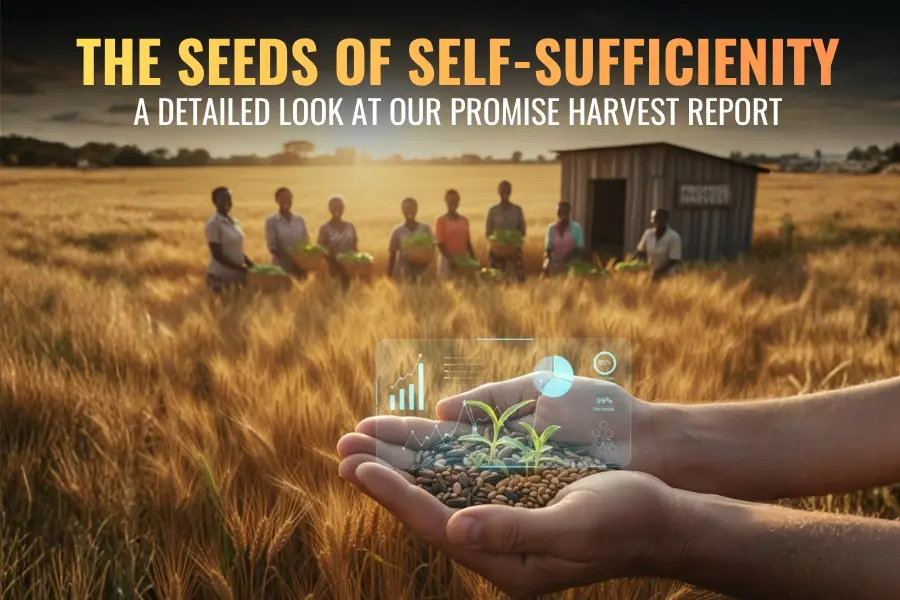
Measurable Harvest Data (August 2025)
The production cycle secured a vital source of nutrition for the Academy’s kitchen.
| Crop | Harvest Amount (Sacks) | Total Weight (Tons) |
| Maize | 50 sacks (130 kg/sack) | 5.4 Tons |
| Soya Beans | 11 sacks (150 kg/sack) | 1.8 Tons |
| Sunflower | 11 sacks (75 kg/sack) | 0.5 Tons |
This harvest is a massive step towards self-sufficiency, reducing our reliance on external supply for core staples.
The Critical Challenge: Unpredictable Rain
The full potential of the farm was tragically hindered by unpredictable weather patterns. The erratic rainfall and sudden shifts in sunny, cloudy, and cold conditions (like winter) severely affected the growth of crops like maize and sunflowers. This climatic instability meant the final yield was significantly less than projected, directly threatening our goal of stable, year-round food availability.
Securing the Future: The Urgent Need for Irrigation Infrastructure
The data proves that the land is fertile and the effort is strong, but the harvest is vulnerable to climate change. Our sustainability goals are now entirely dependent on eliminating this weather risk.
The Solution: Irrigation for a Guaranteed Yield
To solve the challenge of unpredictable rain, our project now moves into the critical infrastructure phase: introducing irrigation agriculture for 15 acres of farmland.
This project will allow us to:
Eliminate Climate Dependency: Produce food consistently without relying on unpredictable rain, securing our supply stability regardless of the season.
Maximize Efficiency: Guarantee the maximum possible yield from every seed and fertilizer investment, maximizing the efficiency of the Sustainable Food Production Africa program.
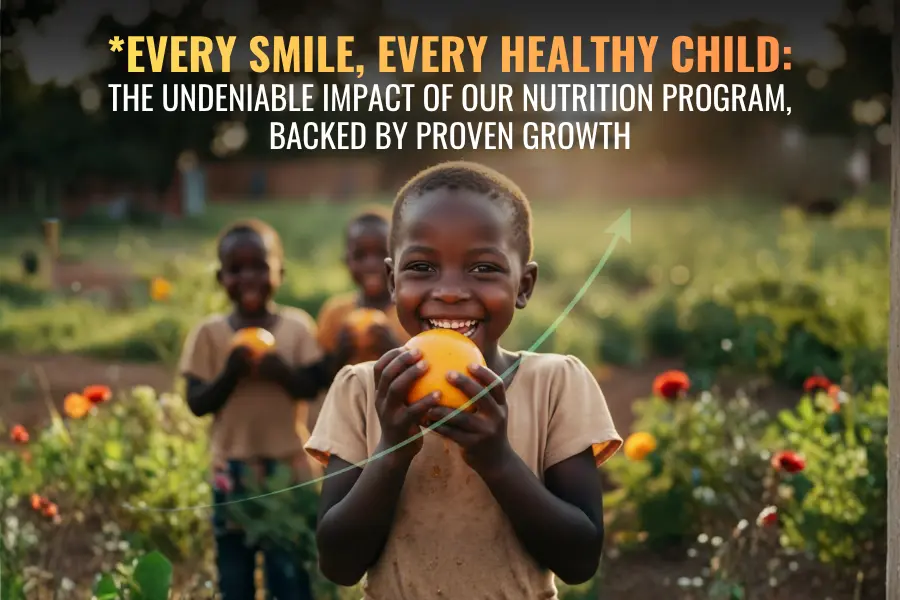
Ensure Food Availability: Achieve the objective of having enough food available at all times, securing the BMI gains made by our students.
Operational and Security Recommendations
Farm Security: To combat wild animals (zebra, elephant, wild beast), we hired a dedicated watchman and fenced the farm’s perimeter using thorn trees. This reinforces the urgent need for durable, professional fencing, like the Barbwire Farm Fence campaign.
Labor: We realized the scarcity of temporary labor during peak times. The solution will involve integrating more sustainable machinery and utilizing students in our vocational training to assist with tasks like fumigating, tilling, and harvesting.
Your Call to Action: Invest in a Harvest that Never Fails
The Promise Harvest has proven that with the right investment, we can achieve food independence. The challenge now is to protect this potential from the weather.
By helping us fund the Solar Equipment campaign or the Water Pump campaign (to support the future irrigation system), you are directly investing in the long-term food security and health of every child at the Academy. This is the definition of Sustainable Food Production Africa—creating a system that sustains itself.
Invest in a Harvest that Never Fails
Directly Fund the Infrastructure that Feeds Our Students:
Support the Solar Equipment or Water Pump campaign today!